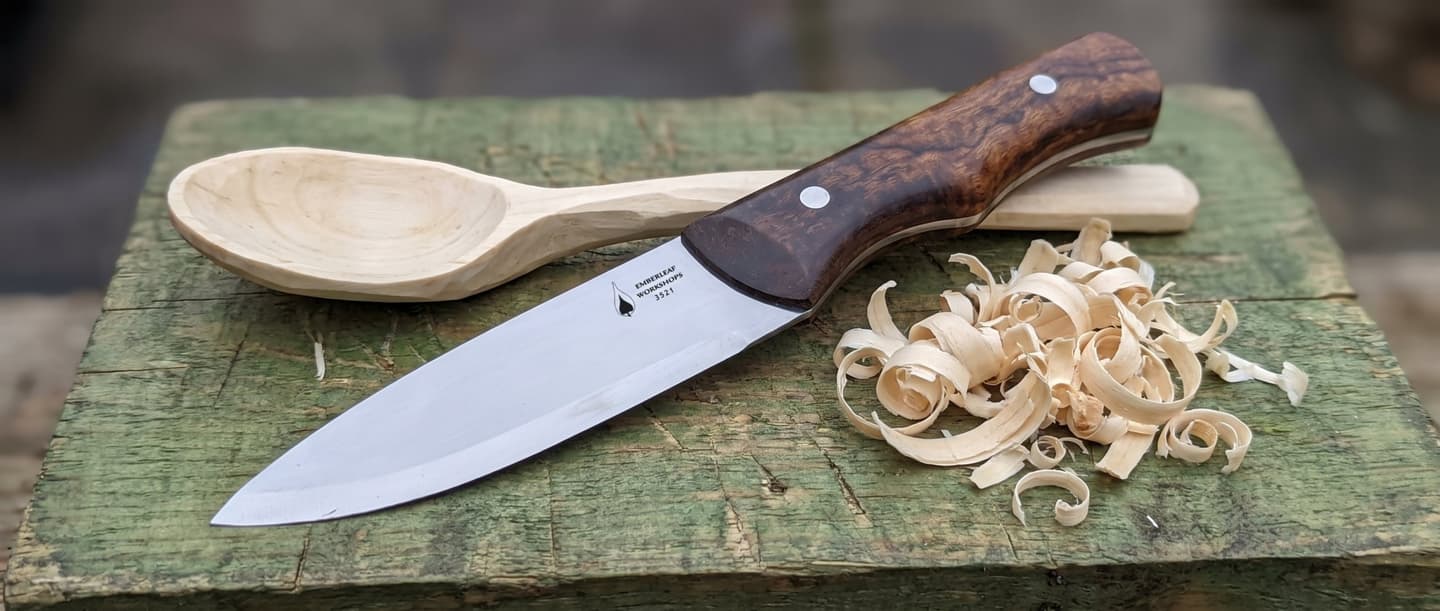
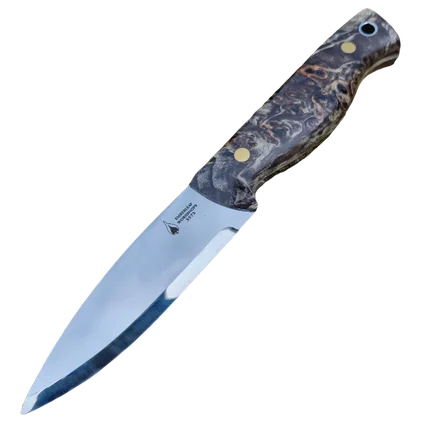
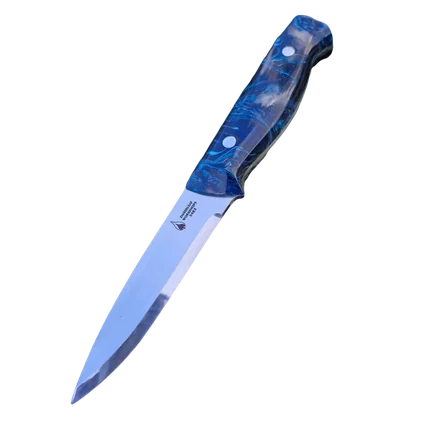
The Rike is what happens when the Bran’s proven DNA is stripped back and sharpened into a specialist’s tool. It is aimed squarely at experienced bushcrafters — a knife that rewards skill and proper technique.
The uninterrupted edge
The guard is gone. In its place, a clean handle-to-edge transition that puts the hand closer to the work, for superior control and more efficient power transfer through demanding cuts and extended carving sessions. This is the configuration seasoned carvers ask for once the guard starts to feel like a chaperone.
Broader, more stable
At 32mm, the blade is broader than the Bran’s, delivering greater stability through wood — batoning, controlled splitting, heavy stock removal. The true Scandinavian grind keeps edge geometry precise, bites clean, and maintains easily in the field; the added height improves tracking and reduces binding under load. Where the Bran generalises, the Rike commits.
The sub-grip
An ergonomic sub-grip section opens up advanced hand positions — fine feathering at one extreme, aggressive removal at the other — giving the user leverage and nuance across the full range of techniques. This is not a first knife. It is a deliberate step toward uncompromised performance for people who know exactly how to use it, and it makes no apology for that.
The steel is yours to choose
Most Rikes leave the bench in one of our working stainless steels: RWL-34, a high-chromium stainless with excellent edge retention and corrosion resistance; PMC27, a powder-metallurgy steel with a fine grain that takes a keen edge and asks very little maintenance; or AEB-L, the razor-blade stainless whose fine carbides give a very keen edge with good toughness. Traditionalists can have O1 tool steel — a carbon steel that sharpens to an exceptionally fine edge and rewards a little oil and attention.
For something quietly spectacular, we pattern-weld our own stainless Damascus in-house from RWL-34 and PMC27 — Vinland, Gysinge, Ladder, Odin’s Eye, Thor and a dozen other patterns, each combining high corrosion resistance with exceptional edge retention. On a Rike, Damascus turns a working tool into an heirloom without costing it a day’s work.
The sheath is part of the knife
Every sheath is handmade in-house and moulded to the individual knife it will carry — not to the pattern, to the knife. Leather comes in classic black or brown, or a custom colour; hand-tooled work is available, up to and including engraved silver panels. For those who work in all weathers, Kydex is offered on our hybrid leather carry system.
Numbered, recorded, guaranteed
Every Rike is numbered and entered in the workshop ledger — steel, handle, date, owner — and carries a lifetime warranty against manufacturing defects. It arrives sharpened and papered, sent signed-for and insured. Decades from now, the number on the blade will still tell its story.
Commissions start with a conversation, or with a design: the design tool lets you set out the steel, handle, pins, engraving and sheath, and send the draft straight to the bench.
 Garron v2Hunting knife, 4.5in blade
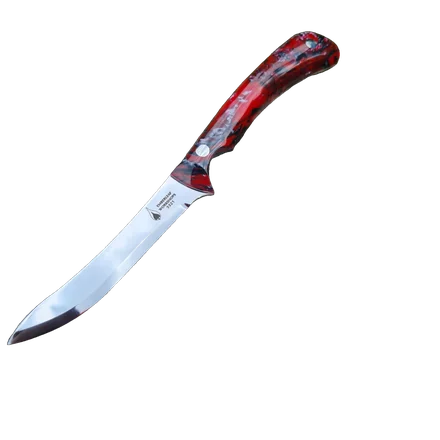 Cael AR v2Hunting knife, 4in blade
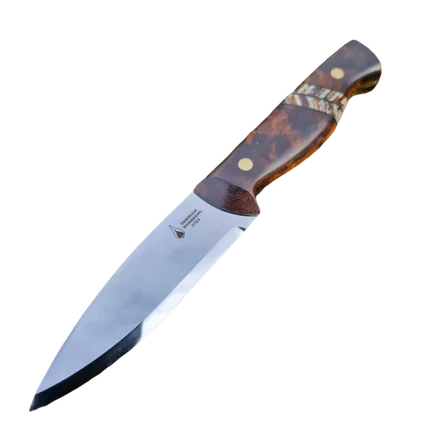 Bran v1Bushcraft knife, 4in blade
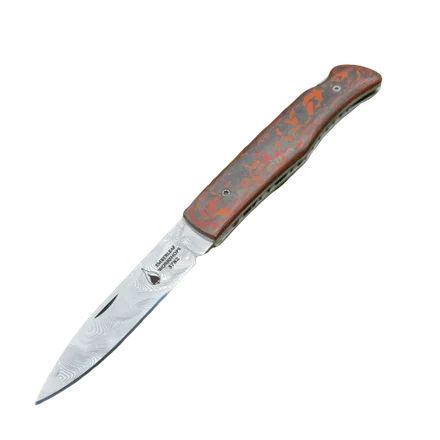 AquilaFolding knife, under 3in
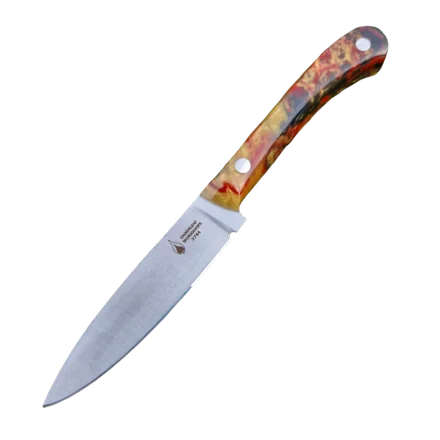 Ventari v2Hunting knife, 4in blade
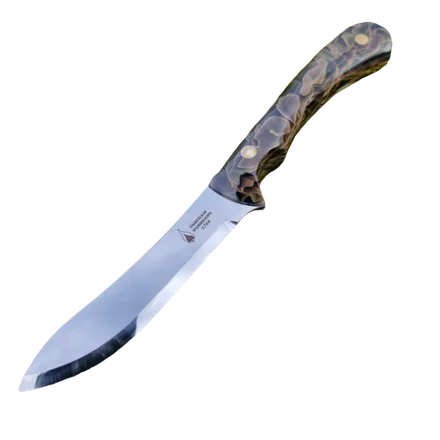 Peryton v1Hunting knife, 4in blade
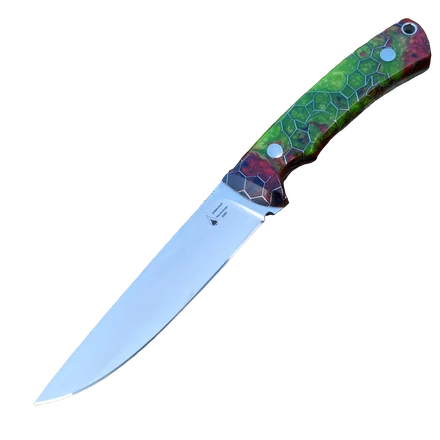 HarrierHunting knife, 6in blade
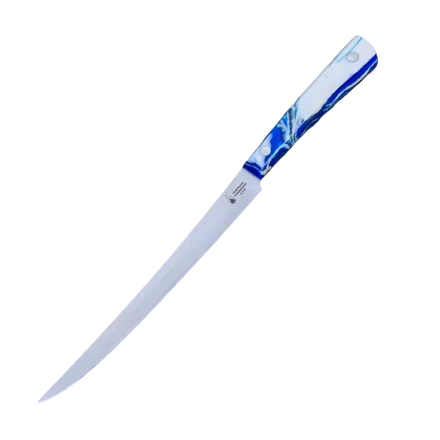 Maturin v1Hunting knife, 7in flexible
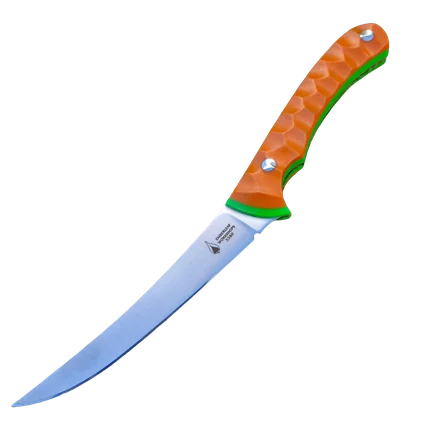 Cuttello v1Chef knife, 5in blade