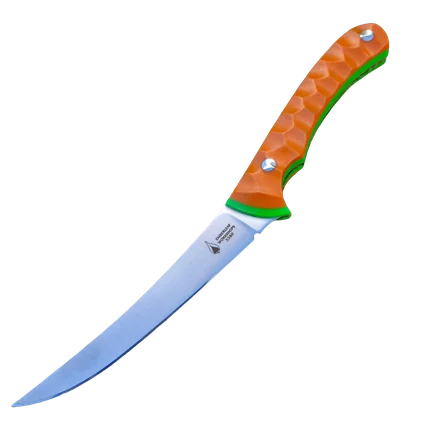
Knife making
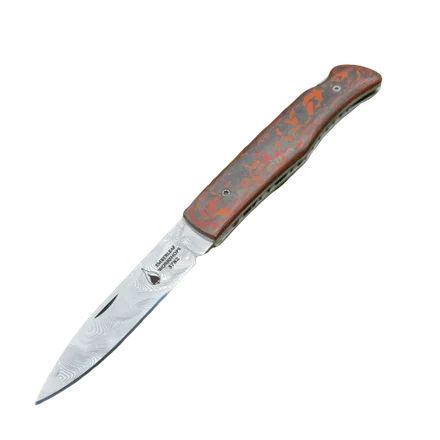
…employs AEB-L steel, which comes from Sweden and was originally designed for Gillette to make cut-throat razors. It is one of the finest knife metals available. We also use Damascus steel, which employs two different types of steel forge welded together and then folded several times.
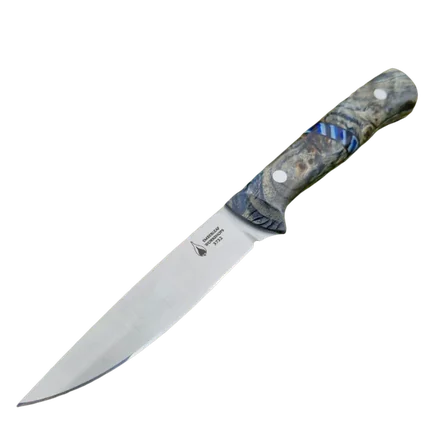
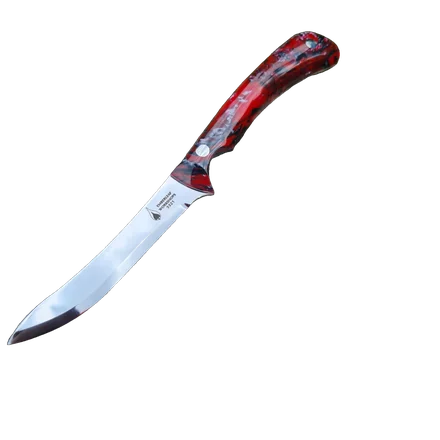
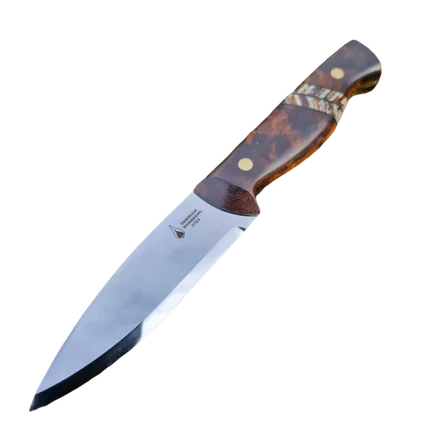
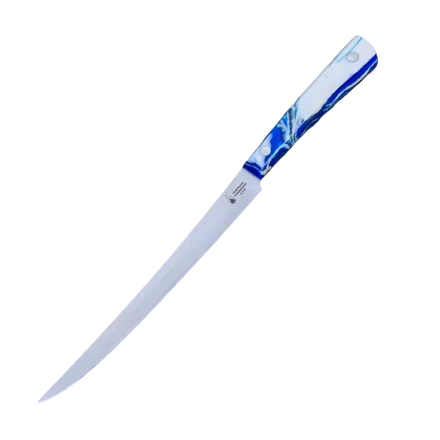
The slim, long form of the blade is a key factor with Emberleaf knives. Dean, Joel and their apprentice, Olly Arnold, work on the principle of producing a blade that is at least three times sharper than the standard surgical scalpel — and that is incredibly sharp.
Producing an edge is a long, laborious business, which involves machine sanding and the delicate, experienced touch of the operator and, as Joel pointed out, one can never obtain a refined edge on cheap carbon steel.
Not only are these knives astonishingly sharp, but they stay sharp. Dean cited the case of a stalker who skinned 20 or so deer in a week, ripping up through the breastbone, yet, when the knife arrived back, it remained as sharp as when first applied. When an Emberleaf knife does eventually require re-sharpening, an edge can be put back on it by the firm for £12.50.
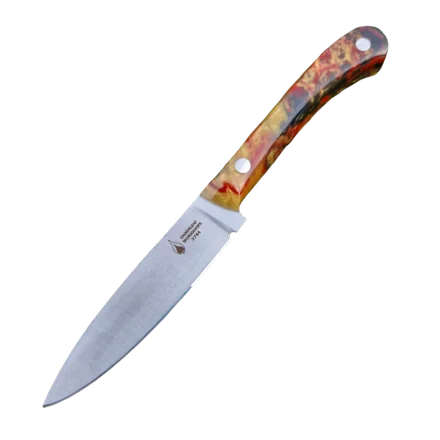
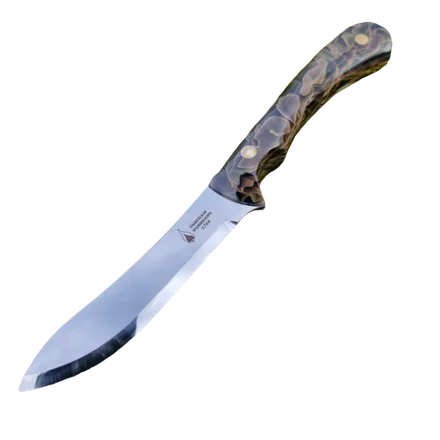
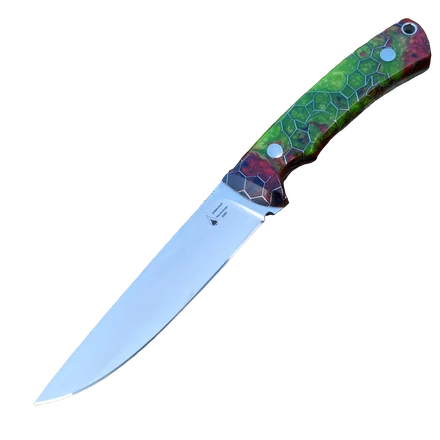
As well as the sharpness of the blades, these knives are also distinguished by their handles, or slabs. The company has more than 1,000 materials, including 40,000-year-old woolly mammoth ivory excavated from the Siberian ice. There is then kingwood, which comes from South America, stabilised poplar, petrified giraffe bone and buffalo horn, stabilised black maple burl and numerous composites and synthetics.
Ergonomic design For the stalker requiring the ultimate knife, the Cael — a name derived from the Celtic word meaning slender — is unique in its design features. Its ergonomic shape allows the dexterity to work within the anal cavity of a carcass and yet still it possesses enormous strength. This knife has been tested by several stalkers, who have pronounced it unsurpassed for design and quality.
A knife requires a sheath, and an Emberleaf knife — the Purdey of the knife world — demands one that will complement it in terms of construction and practical use. Dean, a self-taught leatherworker, makes all the sheaths for the company's knives, and points out that each sheath is individually made to fit the knife. This is essential, as, being custom-made, no two knives are identical, each one can be personalised to the requirements of the customer. Anyone can produce their own knife designs, which the company will work on and make for them. As for the cost of an Emberleaf knife, the price for a finished knife and sheath starts at about £300 including VAT, but after that the cost escalates with the demands of the customer. A knife with mammoth ivory, carved with initials, starts at about £1,200.
The Emberleaf team will shortly be moving from their present, fairly restricted workshop to larger, purpose-built premises, where they will be able to expand their operation in the world of knife-making. The team is also available for personalised lecture/seminars on the use of knives, including specialist instruction on the [hunting] and the safe use of hunting and bushcraft knives. There is no charge for this service, and Emberleaf welcomes enquiries.
Emberleaf Workshops, 4a Pannells Drive, Chichester, West Sussex PO19 8GE, tel 01730 858917. Email info@emberleaf.com · www.emberleaf.com
"A stalker skinned 20 or so deer in a week, ripping up through the breastbone, yet the blade remained as sharp as when first applied."
Sidebar: Knives and the law
It is illegal to: - sell a knife to anyone under the age of 18 (16- to 18-year-olds in Scotland can buy cutlery and kitchen knives), unless it's a knife with a folding blade 3in (7.62cm) long or less, such as a Swiss Army knife; - carry a knife in public without good reason — unless it's a knife with a folding blade 3in long or less; - carry, buy or sell any type of banned knife; - use any knife in a threatening way, even an alleged knife such as a Swiss Army knife; - carry a lock knife (one with a blade that can be locked when unfolded) in public without good reason.
A valid reason for carrying a knife in public: - taking a knife used at work to and from work.
Captions: "Dean Boyd and Joel Andreas are preparing to move from their rather modest workshop to larger premises" · "Mammoth ivory some 40,000 years old and taken from Siberian ice is used to make knife handles"
Shooting Times & Country Magazine, 8 June 2016.
All press features